
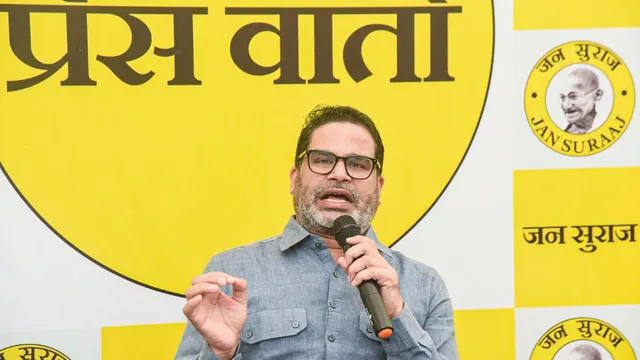
- Kishor's direct entry as candidate was a primary factor.
- Public desired change in long-held BJP seat.
- JSP's micro-targeted campaign breached traditional coalitions.
Bankipur Bypoll: Jan Suraaj Party (JSP) founder Prashant Kishor is heading toward a decisive victory over Bharatiya Janata Party (BJP) candidate Neeraj Kumar Sinha in the high-profile Bankipur Assembly by-election in Bihar. The contest marks the direct electoral debut of the poll strategist-turned-politician, who is attempting to wrest a seat the BJP has held for nearly three decades.
As current counting trends point toward a strong finish for Kishor, five key factors explain the momentum behind his debut performance.
Factor 1: Kishor's High-Stakes Personal Entry
The primary factor behind this performance is poll strategist-turned-politician Prashant Kishor himself. Unlike the 2025 Bihar Assembly elections, where his newly formed Jan Suraaj Party (JSP) failed to secure a seat despite contesting 238 out of 243 constituencies, Kishor chose to enter the fray directly this time rather than fielding another party candidate.
Kishor's candidature decisively shifted the weight of the contest against BJP candidate Neeraj Kumar Sinha.
Factor 2: Mood For Change
The second factor in Kishor's favour is the perceived public mood for change in a seat long held by the BJP, with voters viewing the Jan Suraaj Party chief as a 'better and well-meaning candidate', The Indian Express reported.
Kishor called the bypoll a referendum on Chief Minister Samrat Choudhary and challenged the BJP's narrative of Bankipur as its "stronghold," stating that "it is people who make a fort, not any political party.
Factor 3: Shift In Traditional Party Base Alliances
A key factor behind Kishor's strong performance appears to be shifts in the traditional support bases of both the BJP and the principal opposition, the RJD.
While the upper-caste Kayastha community supported the BJP, sections of other upper-caste groups and OBC voters shifted toward Kishor. Simultaneously, a portion of the RJD's core Muslim-Yadav voter base also appeared to gravitate toward the Jan Suraaj Party.
Factor 4: Focus On Policy And Civil Issues
Throughout his campaign, Kishor focused on core developmental and civic issues, such as employment, education, and municipal infrastructure, stepping away from traditional caste and religion narratives, the report added.
In contrast, the BJP campaign relied heavily on former representative Nitin Nabin's emotional ties with Bankipur voters, rather than detailing a new policy roadmap for the constituency.
Factor 5: The JSP's Strategy
Kishor executed a more structured poll strategy than his rivals. His campaign relied heavily on neighbourhood-level (mohalla) meetings and public interactions across the constituency.
This micro-targeted outreach helped the JSP breach the BJP's ‘'traditional social coalition', while also taking advantage of internal bickering and local organisational friction within the ruling party.