
- By Nidhi Giri
- Thu, 16 Apr 2026 01:00 PM (IST)
- Source:JND
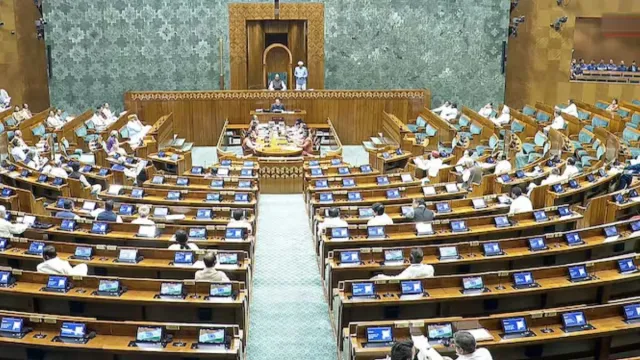
The Centre introduced three bills in the special session of Parliament starting Thursday, including - The Constitution (131 Amendment) Bill, 2026, the one to reserve seats for women in the 2029 Lok Sabha elections, the Delimitation Bill, 2026, to redraw constituency boundaries, and the Union Territories Laws (Amendment) Bill, 2026. While the government has appealed to all political parties to back the bills and ensure its passage, several Opposition parties have expressed concerns. The Opposition has clarified that it is not against the women's reservation but objected to the delimitation process, which they believe weakens the representation of the southern and north-eastern states in the Lok Sabha.
As per Article 368, the constitutional amendment must clear a strict voting threshold in both Lok Sabha and Rajya Sabha under a double majority rule. This requires approval from a majority of the total membership of the House, along with at least two-thirds of those members who are present and casting their votes. This means, a constitutional amendment can only be achieved if the government secures a special majority comprising two-thirds of the members present and voting, in addition to support from at least half of the entire strength of the House.
Lok Sabha Numbers
NDA Seats - 293
INDIA Bloc Seats - 230 To 240
2/3rd Majority Mark - 364 (only when all 543 members vote)
Gap For NDA - 71
Rajya Sabha Numbers
NDA Seats - 141
INDIA Bloc Seats - 58 To 62
2/3rd Majority Mark - 164 (of 245 members)
Gap For NDA - 23
How Will The Numbers Influence Voting?
In the Lok Sabha, National Democratic Alliance (NDA) has a total of 240 seats from the BJP, with support from allies including the Telugu Desam Party (16 MPs) and the JD(U) (12 MPs). On the Opposition side, the INDIA bloc is held by the Congress, which has 100 seats, and the Samajwadi Party, which contributes 37 MPs.
In the Rajya Sabha, the NDA strengthened its position in March this year, increasing its tally from 135 to 141 seats after securing 22 of the 37 contested seats.
Despite this advantage, the government remains short of the numbers required for constitutional changes. NDA is about 70 seats short in the Lok Sabha and 23 short in the Rajya Sabha from the two-thirds majority mark which is around 364 in the Lok Sabha and 164 in the Rajya Sabha. This is needed to pass the proposed Constitution (131st Amendment) Bill, 2026.
Within the INDIA bloc, the four largest parties together account for around 185 MPs in the Lok Sabha - Congress (98), Samajwadi Party (37), Trinamool Congress (28), and DMK (22). If all allies vote in a coordinated fashion, it would be sufficient to block the government from reaching the 364 mark which is required in the Lower House.
However, the situation can change depending on attendance in the House. If Opposition MPs abstain or stage a walkout, the total number of members present and voting would fall, affecting the absolute number.