
- By Shubham Bajpai
- Mon, 27 Apr 2026 03:53 PM (IST)
- Source:JND
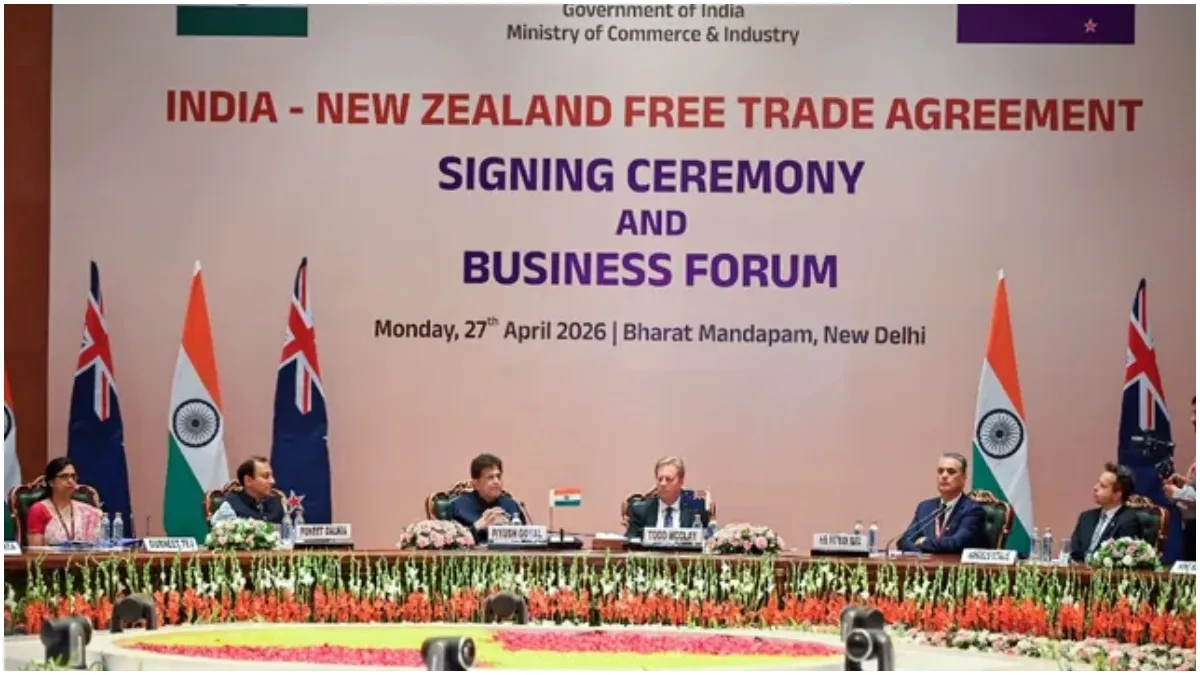
India and New Zealand on Monday signed a free trade agreement (FTA), dubbed as a once-in-a-generation pact. The FTA was signed in the presence of Union Commerce Minister Piyush Goyal and his New Zealand counterpart Todd McLay.
The FTA is expected to strengthen economic ties between the two countries and aims to double bilateral trade, which currently stands at approximately $2.4 billion. The agreement will provide Indian exporters with duty-free access to the New Zealand market, and attract $20 billion in investment over the next 15 years.
The deal also aims to reduce any remaining barriers that could impact trade and investment between the two countries. The agreement has 20 chapters covering key areas such as trade in goods, rules of origin, services, customs procedures and ease of doing business, sanitary and technical barriers to trade, trade remedies, dispute resolution and legal framework.
India's exports to get boost
As part of the deal, India's labour-intensive industries, such as textiles, plastics, leather, and engineering goods, will enjoy duty-free access.
Before the signing, Goyal said on Sunday that the pact would open huge opportunities for Indian businesses, including leather exporters in Agra.
ALSO READ: India, New Zealand To Ink FTA On April 27: Why It Matters And What Will India Gain?
Along with that, the Indian wines and spirits will also enjoy duty-free access to the New Zealand market. India's service sector has also been granted market access guarantees in several high-value NZ sectors, including information technology and IT-enabled services, professional services, education, financial services, tourism, construction, and several other business services.
Opportunities for skilled professionals
The FTA also provisions new opportunities for skilled Indian professionals through the Temporary Employment Entry Visa (TEVV). Through this, 5,000 such professionals will get to live and work in New Zealand for up to three years at a time.
Which New Zealand imports would become cheaper?
In return, India has also granted tariff concessions to New Zealand's agricultural products such as apples, kiwi fruit, manuka honey, and albumin (including milk albumin).
However, these benefits will be subject to quota limits and minimum import price requirements. Several iron, steel, and scrap aluminium products from New Zealand will become cheaper gradually as tariffs on these products will be eliminated over a period of up to 10 years.
Protected Indian sectors
India has essentially kept certain sensitive sectors closed for foreign products and that restriction is well maintained in the India-NZ FTA. The list of excluded items includes dairy products such as milk, cream, yoghurt, and cheese; animal products other than lamb; and a variety of vegetable products, including onions, chickpeas, peas, corn, and almonds. Sugar, artificial honey, and fats and oils of animal, plant, or microbial origin are also excluded.