
- By Raju Kumar
- Tue, 21 Apr 2026 09:00 PM (IST)
- Source:JND
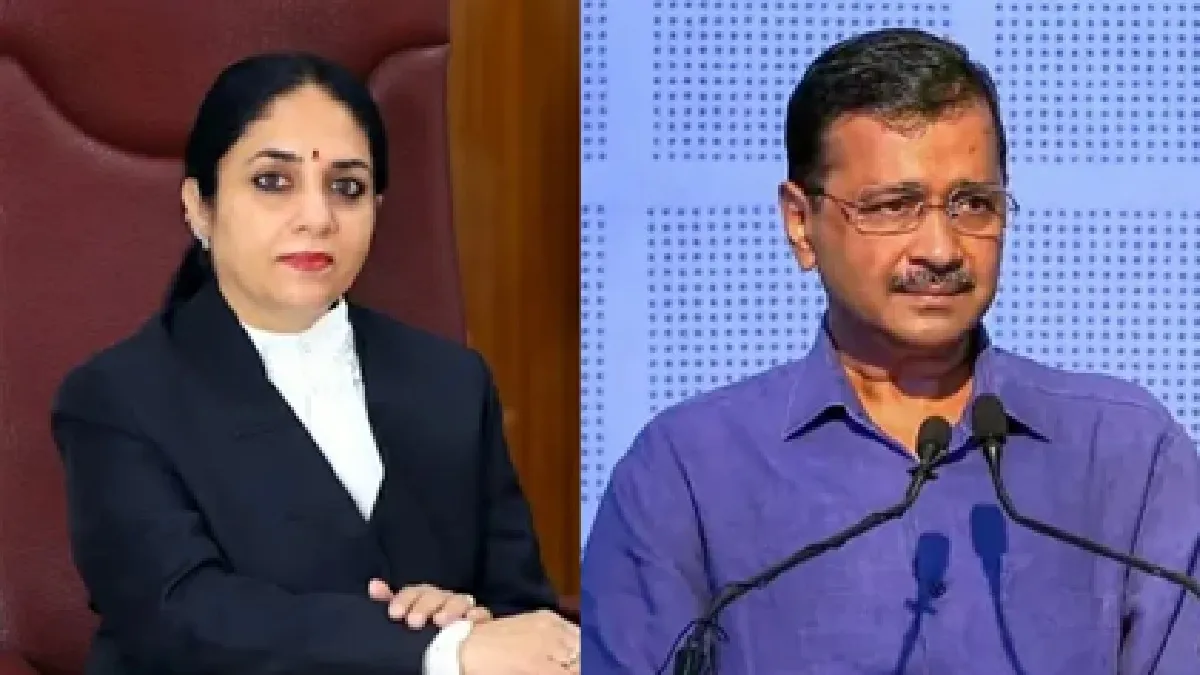
Judge Recuse Row: Justice Swarana Kanta Sharma, who declined AAP national convenor Arvind Kejriwal's plea to recuse herself from hearing the CBI’s challenge to the discharge of former Delhi CM and 22 others in the alleged liquor policy scam case, explained her decision, saying recusing herself from the case would have been an easy option, but the court understands that the position of a judge demands restraint and silence. However, this silence should not cause any harm to the institution, she added.
She stated that every allegation raised questions about the collective institution of the judiciary. There were no allegations of bias or ideological bias in granting relief to Kejriwal and his party leaders in several previous cases, she said. Therefore, there can be no objection to a decision in favour of another, the justice Sharma pointed out.
She Highlights Five Points In Her Explaination:
1. Regarding Kejriwal's argument about the children's inclusion on government panels, Justice Sharma said that this allegation was made solely by Kejriwal. In this court's opinion, even if relatives of a judge are on a government panel, the plaintiff must demonstrate how this impacts the current case. Kejriwal has not demonstrated any such nexus.
She stated that a plaintiff cannot dictate how a judge's children or family members live their lives. Justice Sharma questioned that if a politician's wife can become a politician, how can it be said that a judge's children cannot enter the legal profession? She stated that none of his children have any connection to the excise policy scam.
2. On allegation that the Supreme Court had overturned this court's decision, Justice Sharma said that whether it was the cases of Sanjay Singh and Manish Sisodia or Kejriwal herself, the Supreme Court should be considered. In any case, the Supreme Court has not commented on the orders passed by this court while granting relief. She said that if a higher court sets aside a judge's order, the plaintiff does not have the right to stand here and say that the judge is not fit to hear the case.
3. Regarding Home Minister Amit Shah's statement, the court said that seeking recusal from hearing the case on this basis would be based on a complete figment of imagination. This court has no control over what politicians say on public platforms. Similarly, it cannot control the statements made by politicians. Justice Sharma said that if I recuse myself from this case, the public will assume that the judge is affiliated with a particular political party or ideology. This court, by recusing itself from the case, cannot allow such an impression to develop. Justice Sharma said, "I know that as a judge, I will be criticised, whether by the internet media or the applicant." But recusing herself from the hearing would have profound constitutional implications.
4. On Kejriwal's allegations that she attended the Bar Council's event, the bench stated that this point was raised by Kejriwal alone and this response was solely for her. She stated that the Bar Council's event was not a political event and that she had attended the event to discuss new criminal laws and Women's Day, or to interact with young members of the bar. This cannot be used to imply any ideological bias. Therefore, it is difficult to understand how merely attending as the chief guest or speaker could raise the suspicion of bias or impair a judge's ability to decide a case. Justice Sharma noted that Kejriwal failed to disclose any political statements made by him.
5. Justice Sharma, responding to the argument by senior advocate Sanjay Hegde, representing Manish Sisodia, that Godess Sita had to undergo the 'Agni Pariksha' not once but twice, said, "If this court is asked to undergo the same test by an accused, then this court should question why a judge has to face a test at the behest of an accused, simply because she fears the judge might rule against him?" Justice Sharma said that an accused can prove his innocence, but he cannot be allowed to prove that the judge is tainted. She said that a plaintiff cannot even attempt to judge a judge without evidence. He said that no matter how powerful a politician is, she cannot be allowed to harm the institution without any evidence to prove his allegations against the judge.
(With Jagran.com Inputs)