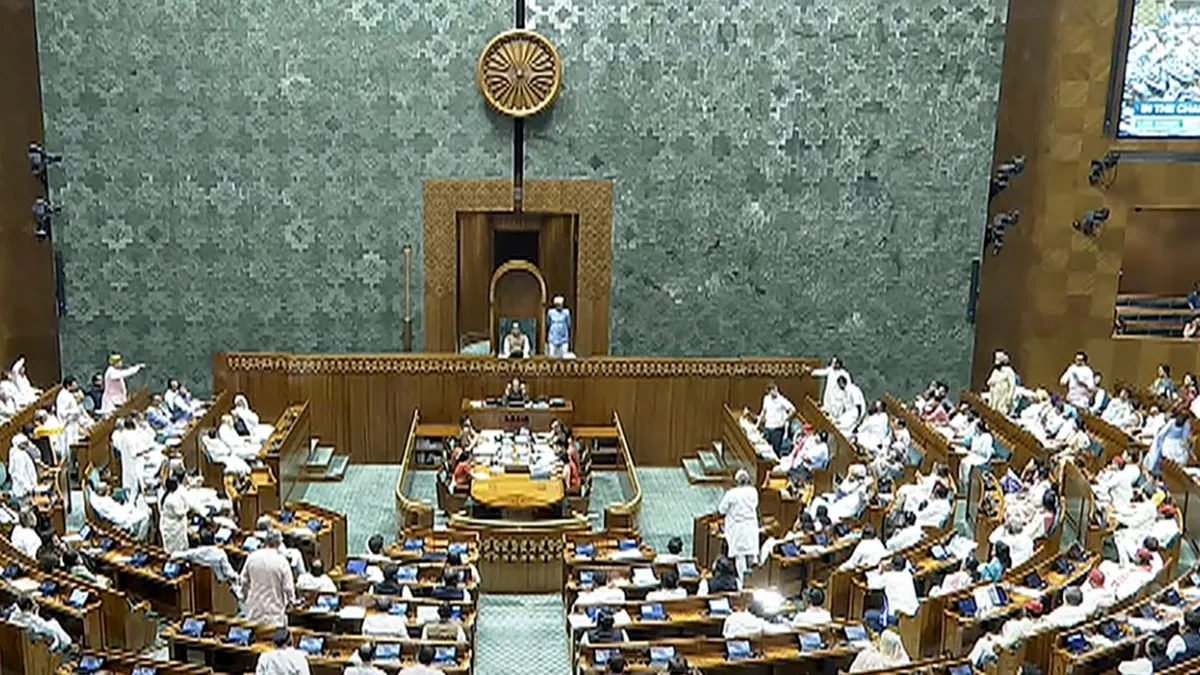
- Government approves 132nd Bill for 33 per cent women's reservation.
- Uniform 50% seat increase across all states and UTs.
- Inter-state seat proportion freeze extended until 2051.
The Union Government approved the Constitution (132nd Amendment) Bill on Friday, which failed to gain a suitable vote in Lok Sabha earlier this year. The provision of the second bill is objected to, retaining the government’s central objective of implementing a 33 per cent reservation for women in Parliament and state assemblies before the 2029 general elections, but with an important political assurance now written into the Constitution, every state and union territory will get 50 per cent more seats than its existing allocation.
The 132nd Bill was rejected in the Lok Sabha earlier session to address the concerns of southern states that a population-based redistribution could diminish their political influence, demonstrating a significant rethink of its delimitation strategy after suffering an unprecedented defeat in Parliament in April.
What’s different between two bills?
On seat allocation, the first bill sought to adjust Lok Sabha seats proportionally based on the 2011 census, ending the interstate seat proportion freeze. While the 132nd Bill instead extends the freeze on inter-state seat proportions until 2051 while proposing a uniform 50 per cent seat increase across all states (raising Lok Sabha strength to 850) to prevent population-growth imbalances.
Recommended For You
Both bills connect boundary readjustments to implementing the 33 per cent women's reservation policy. The 132nd Bill utilises available census data for internal boundary redrawing and introduces seat-rotation mechanisms managed by the Delimitation Commission.
Under the 132 constitutional amendment, the maximum strength of the Lok Sabha will increase to 815 members from states and 35 from union territories, while the maximum strength of state legislative assemblies will rise to 650. The proposed 50 per cent expansion will apply to the existing allocation of seats in each state and Union Territory, thereby preserving their relative share in the Lok Sabha rather than redistributing representation according to population differences.
What changes were made in women’s reservation bill?
The government has also sought to stop the uncertainty over when women’s reservation would become operational. The 106th Constitution Amendment Act, 2023, which provided for a one-third reservation for women, associated its implementation with a delimitation exercise after the first census was carried out at its start. The new amendment changed that requirement with a provision for reservation to be operative following the first delimitation exercise carried out as per the proposed amendment.
The April exercise had sought to remove the existing freeze on the allocation of seats among states and return to a population-based redistribution while raising the Lok Sabha’s ceiling from 550 to 850. The central government stated that expanding the House would accommodate women’s reservation without reducing the existing number of seats. But the absence of a statutory guarantee of a uniform increase left southern states apprehensive about losing their relative representation.
The new exercise proposed will utilise census data to redraw territorial constituencies, but the relative allocation of parliamentary seats among states will not be altered by differential population growth.
The Delimitation (Second) Bill provides for a three-member commission comprising a serving or retired Supreme Court judge as chairperson, the Chief Election Commissioner or an Election Commissioner nominated by him, and the state election commissioner of the state concerned. The Centre will appoint the chairperson and specify the commission’s tenure, which can be extended on its request. The exercise proposed will use census data to redraw territorial constituencies, but the relative allocation of parliamentary seats among states will not be altered by differential population growth.
What are the drawbacks?
The bill also comes with a few drawbacks. The Rajya Sabha’s maximum strength of 250 remains unchanged, changing the relative balance between the two houses. A larger Lok Sabha would also increase the potential size of the Union council of ministers under the constitutional ceiling of 15 per cent of its membership, while raising questions about the time and opportunities available to individual MPs to participate in parliamentary proceedings.
The political significance of the revised formula will therefore extend beyond the immediate question of women’s representation. It will reshape the numerical strength of Parliament, the relative influence of the two Houses and the manner in which states are represented in national decision-making.