
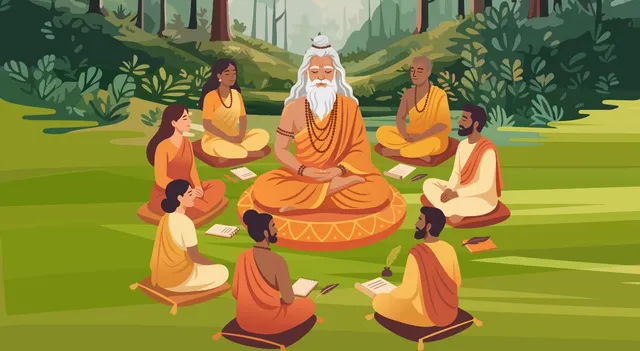
Valuable Gurukul Practices: Long before smart boards and systematic curricula came into play, India’s gurukul system developed generations of thinkers, warriors and scholars through a model based on discipline, closeness to nature and character-first education. The world nowadays, facing the challenges of stress, screen dependency and a widening gap between academics and real life, is now looking for solutions in the past.
5 Valuable Gurukul Practices:
From the Guru-Shishya bond to learning through life skills, here are 5 valuable gurukul practices that still hold relevance in the modern world:
1. The Guru-Shishya Bond:
When teachers were teaching in a gurukul, they knew all their students’ personalities, strengths, failures, and speed of learning very well. The result of this kind of familiarity is that the teacher was able to provide advice that was really personal and therefore unique.
From classrooms to corporate, this behaviour of a mentor can improve their connections with a team or students. One ancient technique of teaching that is still relevant today is mentoring in smaller groups, individual meetings, and mentor viewing their role as guides. The relationship that is built this way lays the foundation of trust, and trust is where real learning starts.
2. Learning Through Daily Life:
Gurukul taught life skill are crucial for living, irrespective of gender, before it became a trend. Cooking, cleaning, farming, and doing household chores were a part of the student’s education instead of being seen as unrelated to education. Through these tasks, the student learned responsibility, patience, and independence in ways that books could not promote.
3. Character Before Career:
Gurukuls not only emphasised education but also values like humility, respect, and honesty. Character is expressed not through how well you are performing, but through a person’s behaviour. Focus on structured value-based teaching, storytelling, and reflection may bring the balance between values and achievement back to today’s life.
4. Learning In And With Nature:
Another life lesson inspired by the Gurukul is staying close to nature. In old times, classes were frequently conducted in nature, near rivers, under trees and amidst nature's rhythms. Being exposed to nature not only helped in bringing peace of mind but also enabled you to concentrate better.
Even in current-day institutions, despite the non-availability of enough outdoor space, institutions can include nature walks and gardening time wherever possible, thus allowing everyone some time without staring at screens in the ever-hustling, fast-paced world.
ALSO READ: 6 Lord Shiva Teachings Every Gen Z Should Follow To Deal With Toxic People
5. Simple Methods Of Discipline:
Following a fixed schedule is inherent in Gurukul life, which involves getting up early in the morning, teaching in between and having physical functions. To put it simply, the free-of-distractions way enables students to learn what focus and discipline really mean. In today’s world, a well-organised daily schedule, along with a time in a day when people do not use technology and meditate, can really help to focus and stay calm.
According to Mr Rishi Pal Chauhan, Educationist, Founder Chairman and Managing Director of Jiva Learning System. "The gurukul system was never a matter of merely following textbooks or being educated formally. It was about giving birth to a fully formed person, capable of thinking rationally, living an uncomplicated life and acting honourably.”
ALSO READ: Chanakya On Leadership: Your True Nature Never Truly Changes
Lastly, eliminating the traditional practices does not imply that the modern methods of life and teaching have to be excluded. The most appropriate method is to merge the timeless principles with modern methods. Especially in terms of young learners’ lives. The principle of learning remains the same; the goal is to shape good and responsible people." The gurukul reflects how to accomplish this goal.