
- By Ajeet Kumar
- Thu, 16 Apr 2026 09:15 AM (IST)
- Source:JND
- US warns of sanctions on countries purchasing Iranian oil.
- India must find alternative oil suppliers, facing higher costs.
- Geopolitical shift impacts India's energy security and strategic interests.
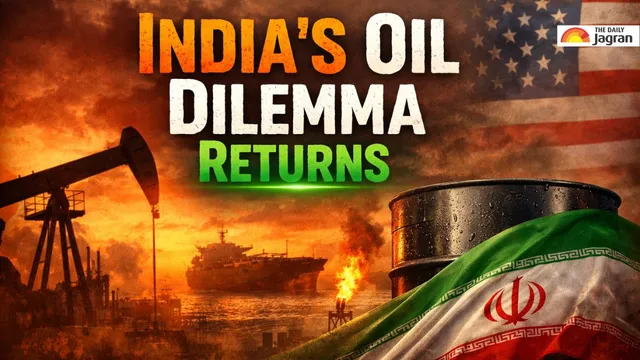
India is once again facing a difficult energy and diplomatic balancing act after the United States warned that countries purchasing Iranian oil could face secondary sanctions. The move comes just as New Delhi had cautiously resumed imports from Iran after a gap of nearly seven years.
"We have told countries that if you are buying Iranian oil, that if Iranian money is sitting in your banks, we are now willing to apply secondary sanctions," US Treasury Secretary Scott Bessent told reporters at the White House.
The US maritime blockade on Iran began on Monday as the Iran war entered its seventh week. China previously bought more than 80 per cent of Iran's shipped oil. "We believe (that with) this blockade ... there will be a pause of Chinese buying," Bessent said.
Why is it concerning for India?
1. The US decision effectively closes the narrow window that had allowed India and a few other countries to restart limited trade with Tehran under informal flexibility.
2. With Washington now tightening enforcement, Indian refiners are expected to reassess their purchases to avoid exposure to penalties, particularly restrictions on access to the US financial system.
3. Iranian crude has traditionally been attractive to Indian buyers due to its competitive pricing and favourable payment terms.
4. However, analysts say the risk of sanctions outweighs the economic benefits.
What are the options India have?
In the immediate term, India is likely to scale back or halt Iranian imports and turn to alternative suppliers. Countries such as Saudi Arabia, United Arab Emirates and Iraq are expected to fill the gap, though at higher costs. India may also continue expanding purchases from Russia, which has emerged as a key supplier of discounted crude since 2022. But the US has categorically said it is lifting oil sanctions wavior that it had given to India around a month ago.
ALSO READ: 'Better Stop Now’: Trump Fires Warning Shot As Iran Accused Of Hormuz Passage Fees
India's energy needs facing headwinds
The shift, however, is not without challenges. Increased dependence on a narrower set of suppliers could expose India to supply shocks, particularly amid rising tensions around the Strait of Hormuz, a critical route for global oil shipments. Any disruption in the region could push prices higher, adding to inflationary pressures in Asia’s third-largest economy.
ALSO READ: What A US Naval Blockade Of Iran Means For Oil Flows; Which Importers Are Most Affected?
Diplomatically, India is expected to maintain a cautious approach. While aligning with US sanctions in practice, New Delhi is likely to continue engaging with Tehran to safeguard strategic interests, including the development of the Chabahar Port, which provides vital connectivity to Central Asia.
Experts say India may explore the possibility of seeking limited waivers from Washington, though the chances appear slim given the current geopolitical climate. Alternative payment mechanisms that bypass the dollar are also seen as risky, with banks and insurers reluctant to participate.
(With inputs from Reuters)