
- By Vaidika Thapa
- Fri, 17 Apr 2026 04:02 PM (IST)
- Source:JND
Despite the United States’ naval blockade around ports near the Strait of Hormuz to stop Tehran from exporting oil and gas, some ships linked to Iran were still able to pass through. The blockade came after peace talks between Washington and Tehran collapsed in Islamabad on April 11. US President Donald Trump said that the goal was to pressure Iran by cutting off its oil income and reducing its control over this critical waterway.
US Military Blockaed In Hormuz
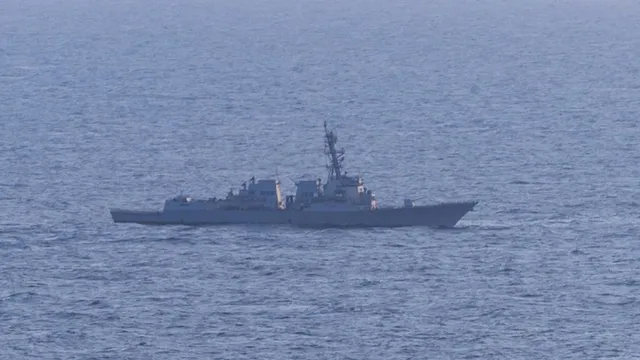
To enforce the blockade, the US sent a large military force, including thousands of troops, warships, and aircraft. In the beginning, Washington claimed success, saying ships were stopped, and some were forced to turn back, showing strong control over the area. In a post on X, the US CENTCOM said, “After implementing the blockade on ships entering and departing Iranian ports, American forces halted economic trade going into and out of Iran by sea. U.S. Sailors, Marines, and Airmen remain positioned and ready to act against any vessels seeking to violate the blockade.”
Quiz
Thousands of U.S. service members, including 5,000 Sailors and Marines from the Abraham Lincoln Carrier Strike Group, are executing the mission to blockade ships entering and departing Iranian ports. 📽 of USS Abraham Lincoln (CVN 72) conducting flight operations in the Arabian… pic.twitter.com/Q07nAosJyq
— U.S. Central Command (@CENTCOM) April 15, 2026
However, some Iranian ships were still able to pass through without being stopped, highlighting problems in the blockade. According to news agency AFP report, Comoros-flagged tanker Elpis, sanctioned by the US, sailed from Iran's Bushehr port and crossed the Strait of Hormuz on Monday without interception by US forces. This showed that even with a strong military presence, it is difficult to fully control the busy waterway.
How Iran-Linked Ships Are Evading Blockade?
A report by The New York Times, citing maritime intelligence experts, stated that ships in and around Hormuz "seemed to be adopting tactics to avoid detection.” One common trick used by these ships appears to be switching off their tracking system, Automatic Identification System (AIS). After this system is turned off, their location cannot be seen by others, allowing them to move secretly.
Another common method is sending false information. This means ships can fake their location, destination, identity or even pretend to be other ships. This method is called spoofing and makes tracking much harder. To evade detection, ships can also change or hide their identification numbers. These numbers are supposed to identify each vessel and by altering these numbers, ships can avoid getting recognised by authorities.
Some ships can also use false flags, which means they register under different countries to hide their real origin. In some cases, complex ownership structures of ships make tracking difficult. Vessels also tend to follow routes that avoid direct checks, such as hugging coastlines or traversing through less monitored areas.
While it is not exactly clear which methods are used by Iran-linked ships to get around the blockade, their ability to pass through without detection shows how difficult it is to fully control global shipping routes.
You May Also Like To Watch: