
- By Ajeet Kumar
- Thu, 16 Apr 2026 12:06 PM (IST)
- Source:JND
- Trump posted Jesus image, sparking widespread criticism.
- Iran conflict strategy now uses religious rhetoric.
- Pope Leo XIV rejects war justified by religion.
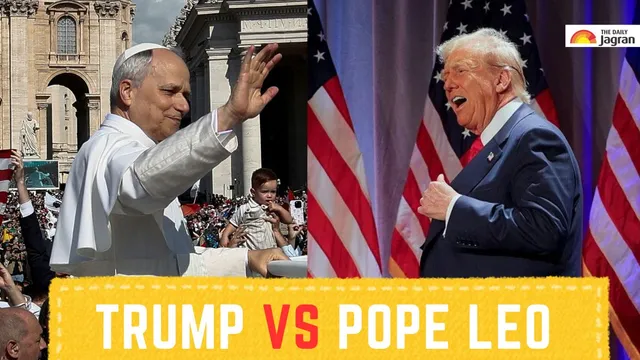
US President Donald Trump posted an image of Jesus embracing him on Wednesday, as a war of words between his administration and the pope showed little sign of abating. His post came days after he faced massive criticism from the whole world. In fact, some members of his Republican party have also come down heavily on the US president over his bizarre remarks and posts against Pope Leo.
I am repulsed by this photo. Does Trump now think he is Jesus? First he attacks and insults Pope Leo, now he depicts himself as Christ and tries to mock God. This is outrageous, offensive, and profane. Clearly he is not well. As an American, a Catholic, a human—I am disgusted. pic.twitter.com/qvMJm67XrZ
— Rep. Jim McGovern (@RepMcGovern) April 13, 2026
The trajectory of the Iran conflict under Trump reveals a shifting strategic narrative, one that has evolved from hard military objectives to a more complex, and increasingly controversial, ideological framing.
America’s new civic religion is Israelism, Christianity without the New Testament, and it’s the most unforgiving faith of all. pic.twitter.com/i6V6bXaqbH
— Tucker Carlson (@TuckerCarlson) April 16, 2026
Phase 1: Regime Change Narrative
At the outset, the war was framed around weakening or toppling the Iranian regime. Trump repeatedly justified military action by citing Iran’s nuclear ambitions and internal repression, portraying intervention as both a security necessity and a moral imperative.
This phase aligned with traditional US interventionist logic: eliminate threats, reshape regional order.
Phase 2: The Hormuz Pressure Strategy
As the conflict progressed, focus shifted toward strategic choke points like the Strait of Hormuz, a critical artery for global oil trade. Control over Hormuz became a tool of economic warfare, with blockades and threats aimed at crippling Iran’s oil exports and increasing global pressure.
This marked a move from regime change to economic coercion and global leverage, raising stakes for countries like India dependent on oil flows.
Phase 3: Emergence Of Religious Rhetoric
The most striking shift, however, is rhetorical. Members of the administration have invoked religious language to frame the conflict, with references suggesting divine backing for military action.
This has triggered a rare and public clash with Pope Leo XIV, who has strongly rejected any attempt to justify war through religion, stating that “God does not bless any conflict.”
The Vatican’s stance reframes the war as a moral failure rather than a strategic necessity, directly challenging the White House narrative.
Trump-Pope Feud: Why It Matters
Trump’s unusually sharp attacks on the Pope, calling him “weak” and criticising his stance, have escalated tensions beyond geopolitics into the religious sphere.
This is significant for three reasons:
Moral legitimacy battle: The conflict is no longer just military, it’s about who defines “right” and “just.”
Domestic politics: Catholic voters, a key bloc in the US, are now caught between political loyalty and religious authority.
Global perception: Framing war in religious terms risks widening divisions and escalating ideological polarisation.
(With inputs from agency)
You may also like to watch